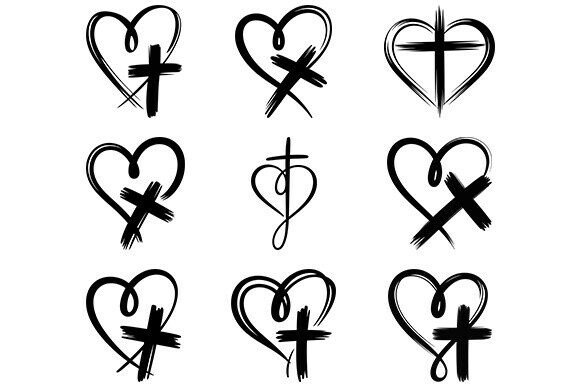
Christian Heart with Cross SVG
As a designer who’s stitched over 300 custom embroidery projects — from boutique baby onesies to holiday market aprons and Etsy shop bestsellers — I opened Christian Heart with Cross SVG not as a shopper, but as a maker evaluating whether this design would hold up in real-world use. My test case? A linen-cotton blend kitchen towel for a local gift shop’s Easter collection — something meant to feel reverent but not stiff, handmade but polished, faith-centered but quietly elegant.
A First Impression That Feels Intentional, Not Generic
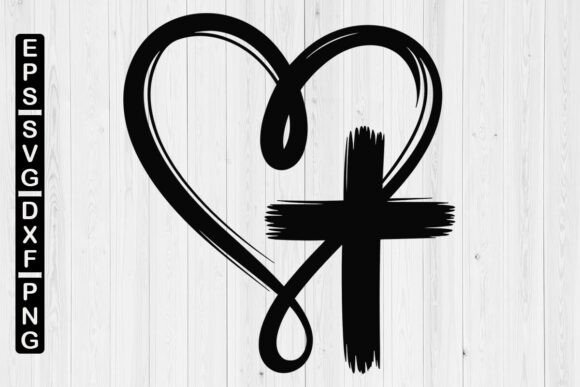
The Christian Heart with Cross SVG lands with gentle confidence. It’s not ornate or fussy — no florals crowding the cross, no scripty Bible verses competing for attention. Instead, it’s a clean, centered heart shape with a slender vertical cross embedded inside, subtly integrated rather than tacked on. The lines are smooth, the proportions balanced: wide enough to read at 3” tall, compact enough to sit neatly on a baby bib or cap front. It reads as warm, sincere, and design-conscious — not mass-produced clip art. That matters when you’re building trust with customers who choose handmade over big-box.
Where This Design Earns Its Keep (and Where It Doesn’t)
I’ve used Christian Heart with Cross SVG on sweatshirt cuffs, tea towel hems, embroidered patches for church volunteers, and pillow covers for nursery decor — and it performs consistently well across those uses. On medium-weight cotton (like tote bags or aprons), the shape holds crispness in satin stitch borders and reads clearly even after multiple washes. On baby onesies? Paired with soft poly thread and light tear-away stabilizer, it stays smooth and non-irritating against delicate skin.
But here’s what I watch closely: Christian Heart with Cross SVG isn’t built for ultra-fine detail work. There’s no tiny lettering, no intricate filigree — and that’s smart. It means fewer thread breaks, less digitizing guesswork if you’re converting it for machine embroidery, and stronger durability on textured fabrics like terry cloth or heavy canvas. That simplicity also makes it ideal for small hoop sizes (4” or under), especially on curved surfaces like caps or rolled sleeves — no awkward stretching or distortion.
Fabric & Function: Know When to Lean In — and When to Pause
This design shines on stable, medium-to-heavy fabrics: denim jackets, canvas totes, twill caps, linen pillow covers, and woven tea towels. On those, the heart-and-cross balance feels grounded and intentional. But on thin, stretchy knits (like lightweight t-shirts or ribbed baby bodysuits), I recommend testing first — not because the design fails, but because the visual weight can shift. A dense fill stitch may pucker; a narrow satin border may sink into the fabric grain. Always pair it with cutaway or iron-on stabilizer on anything with give.
For dark fabrics, contrast is your friend: white or ecru thread lifts the shape beautifully. On light backgrounds, navy or burgundy adds quiet reverence without shouting. Avoid pale yellow or pastel pinks unless you’re intentionally softening the message — they blur readability at smaller scales.
What It Adds to Your Finished Product — Beyond the Stitch
Using Christian Heart with Cross SVG doesn’t just add decoration — it adds narrative cohesion. A personalized gift (say, a baptism towel with baby’s name + this design) feels thoughtfully composed, not slapped together. For an Etsy seller, it elevates perceived value: customers recognize care in composition, not just content. And for a craft business owner, it supports brand consistency — imagine it stitched identically on staff aprons, customer thank-you cards (as a printable mockup), and seasonal packaging tags.
It also avoids cliché. Unlike overly literal religious motifs, this design invites quiet reflection. That resonates with buyers who want meaning without overt proselytizing — think wedding gifts for interfaith couples, hospice care packages, or graduation keepsakes where tone matters as much as symbol.
Practical Designer Notes Before You Stitch
- Always test on scrap fabric first — especially if adapting for machine embroidery. Check how satin stitch edges behave on your target material.
- Review stitch density if converting from SVG to embroidery file. Too dense = stiffness and puckering; too sparse = loss of shape definition.
- Confirm hoop size compatibility. While the SVG itself is scalable, your embroidery software and machine may impose limits — particularly for tight corners or fine inner cross lines.
- Inspect small details at 200% zoom. Does the cross stem connect cleanly to the heart? Are anchor points smooth? Rough vectors translate poorly to stitch paths.
- Test black-and-white mockups — it reveals contrast issues before you commit thread or fabric.
- Use proper stabilizer. Even simple designs lift or distort without support, especially on woven fabrics with loose weaves.
- Verify licensing before selling finished items or bundling digitally. Since this is a digital embroidery file listed under Crafts and Graphics, confirm whether commercial use is permitted — don’t assume.
A Design That Serves the Maker — Not Just the Message
At its core, Christian Heart with Cross SVG works because it respects both the craft and the context. It doesn’t demand special equipment or advanced skills. It fits naturally into workflows — whether you’re prepping for a craft fair batch, fulfilling an Etsy order, or designing a limited-run boutique collection. It’s versatile without being vague, symbolic without being obscure, and timeless without feeling dated.
For embroidery designers and creative entrepreneurs, that kind of reliability is rare. It means less time troubleshooting, more time connecting — with fabric, with stitch, and with the people who’ll hold your finished product in their hands.